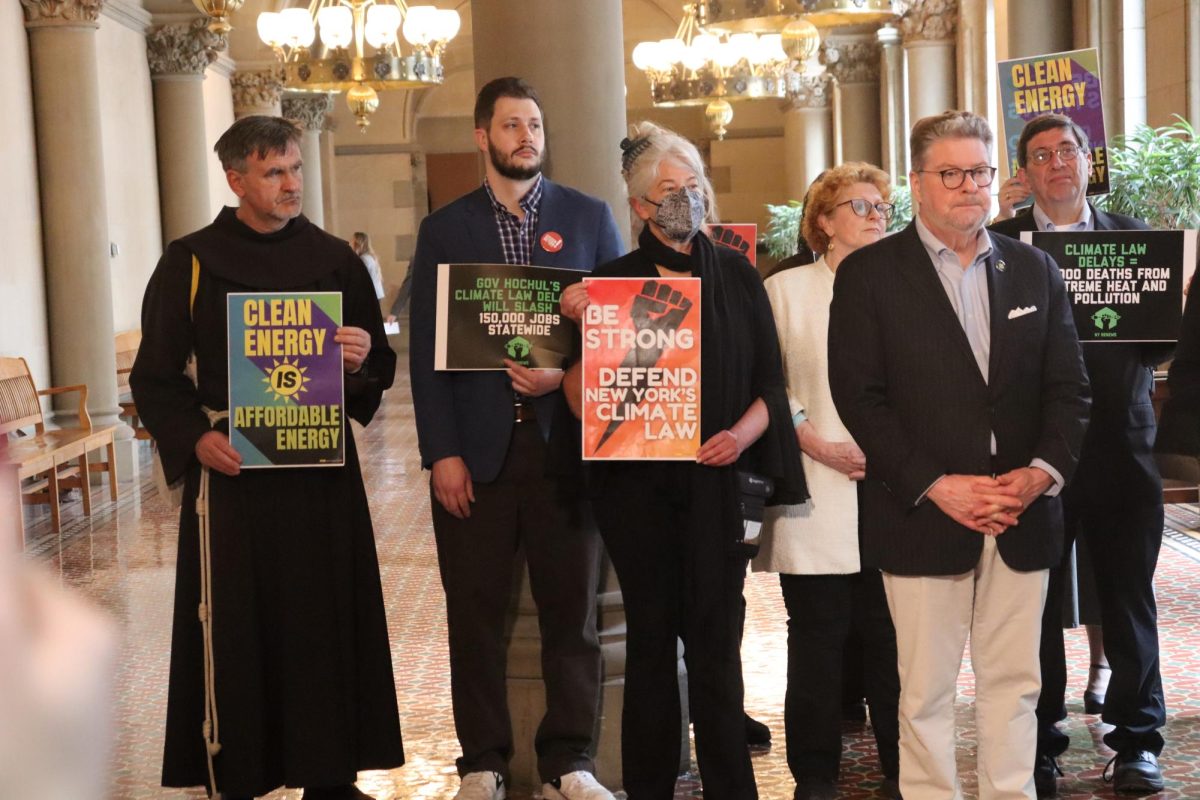
Lawmakers and environmental justice advocates gathered at the Capitol on April 14 to speak on Gov. Kathy Hochul’s decision to adjust the Climate Leadership and Community Protection Act (CLCPA).
At the rally, senators, assemblymembers and advocates came to address their concerns over adjustments to the original law and defended CLCPA by calling it “valuable” and a “necessity.” The lawmakers and advocates explained their work to get the law passed, and their refusal to accept the law being adjusted.
“Many activists worked hard to get the CLCPA passed. We continued to work tirelessly to get it implemented and now we have to defend it,” said Margaret Riley, one of the advocates for CLCPA.
The CLCPA passed in 2019, and came as a result of the Trump administration’s pushbacks against environmental protection acts. The goal for the law was to lower greenhouse gas emissions 40% based on 1990 levels by 2030 and 85% by 2050 in New York state.
The law was also intended to create jobs for over 150,000 New Yorkers. At the rally, Senator Pete Harckham, chair of the committee on environmental conservation, spoke on the promise of jobs with roles such as project laborers, local hiring apprenticeships and community-based jobs starting at minimum wage.
“Implementing the climate law, as is, will create 150,000 good paying jobs in New York State. How do we know what we’ve been paying? Because all of us wrote the waiver standards into the budget several years ago, so the money will go through the Climate Action Fund,” said senator Harckham.
Though the supporters of CLCPA are confident in the law’s ability to address climate change, the results have not been what was anticipated. Since the law was enacted, New York state has been lagging behind on greenhouse gas removal with a slower rate than promised. So far the removal has reportedly reached 23% progress toward reaching the 2030 goal.
Governor Hochul’s proposed rollbacks on the CLCPA push back the 2030 deadline because of concerns for New Yorkers energy bills, and renewable energy plants being unable to generate enough power for the state.
If the proposed rollbacks are enacted on the CLCPA, then the 2030 deadline for emission reduction would be moved to 2040. The deadline for Hochul to develop further regulations for reducing emissions would also be pushed back. The promised number of jobs would be affected by the change as well.
According to activists at the rally, this setback would be detrimental and would diminish their work to make New York’s energy market more sustainable. However, the full effect of the proposed cutbacks of CLCPA will not be seen until the state budget is passed this spring.