Recent buffer-zones proposed by the Governor and others have recently stirred commotion as they have raised a discussion between lawmakers and advocates over the freedom of religion and the freedom of speech.
At the end of March this year, the Governor, along with State Legislators, announced proposals to establish buffer zones around places of worship and reproductive health centers. Legislative sponsors outline that the proposals were introduced because religious communities across the state have shown growing concern regarding harassment and demonstrations targeting places of worship. The new regulations intend to protect individuals entering places of worship or reproductive health centers from speech by protestors with the intent to “alarm or annoy.”
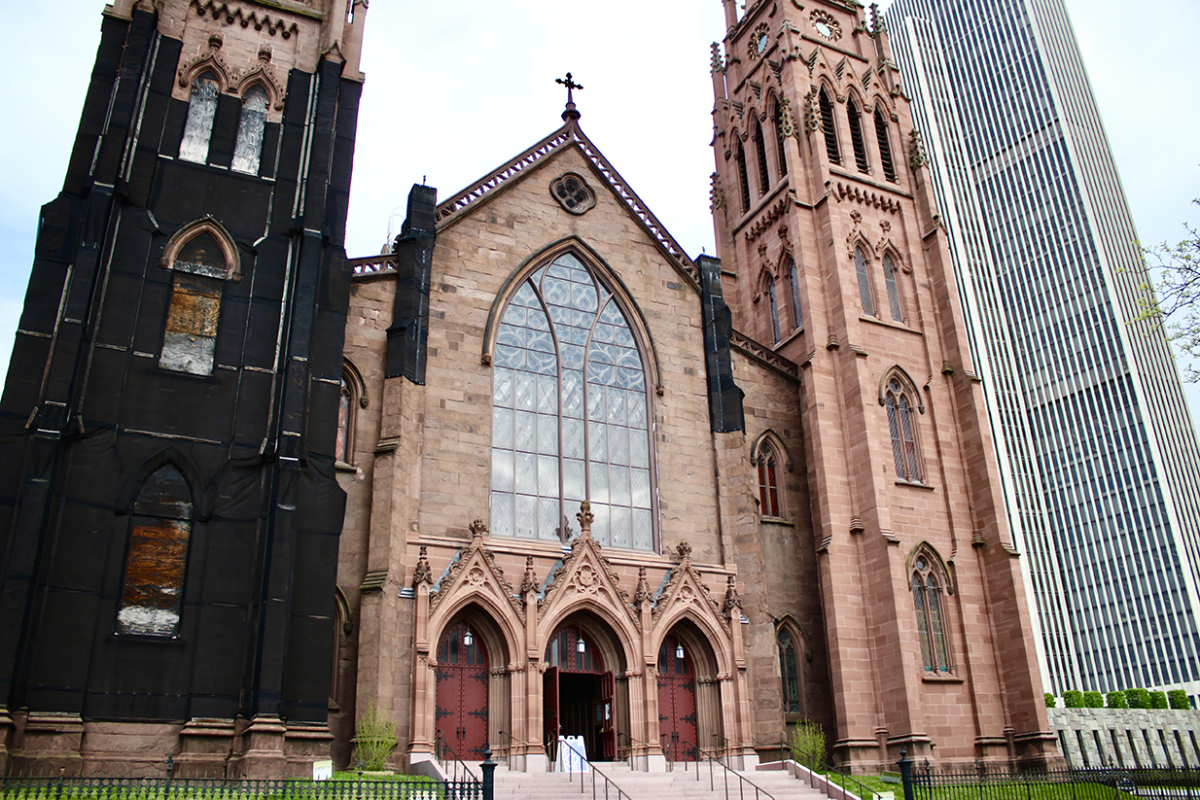
The proposed bill, S.8599/A.9335 , is sponsored by State Senator Sam Sutton and Assemblymember Micah Lasher. If approved by the Legislature, the new law would specifically concern crimes of interference with health care services or access to places of religious worship. Outlined in full on the State senate website, the bill proposes expanding current interference law to include groups of two or more people demonstrating or preparing to demonstrate within 25 feet of reproductive health care facilities and places of worship. The bill’s language outlines a place of worship as including a building, structure or space used mainly for religious worship and the public property within a 25-foot radius of the location.
The bill would also make it so a repeat offense could be charged as a class E felony, the same charge as non-violent offenses like felony stalking and criminal mischief.
Hochul first raised the concern publicly in January, as a component of a larger collection of safety proposals in her preliminary executive budget, building off of legislation introduced last December by Senator Sam Sutton and Assemblymember Micah Lasher. The Governor has framed the buffer-zone proposal as the state government’s response to rising instances of antisemitism and continued security threats against houses of worship.
In a March 13 press gaggle, she cited synagogues as being “particularly vulnerable,” and as such, she is advocating to get protest buffer-zones approved by the Legislature quickly, in order to provide needed protection. The Governor said the proposal would protect worshippers by means of time, place and manner restrictions while still ensuring the right to protest.
In an NY1 interview, Hochul said the proposal, once enacted, would create a 25-foot buffer zone from the property line of places of worship so that New Yorkers are free to go to “the place they want to go, and deepen their relationship with God and their community without being harassed or screamed at.”
Lawmakers supporting the measure have echoed a similar message. In a March 11 press release, Sutton and Lasher called on Hochul and legislative peers to include the buffer-zone proposal in the final state budget. The press release from Sutton’s office described the proposal as an attempt to balance legal protections for free speech with the right of New Yorkers to gather safely and practice religion without harassment or intimidation.
Sutton said that he was proud to support legislation creating a 25-foot protective buffer zone around houses of worship, adding that “protecting the right to protest and protecting the right to pray are not competing values. We will protect our communities, we will defend our civil liberties, and we will uphold the values that make this state strong.”
Other lawmakers quoted in the release included Senator Liz Krueger, who expressed, “No one should be afraid to go in and out of their house of worship.”
“It is critical that we protect our civil liberties and the rights that we have, even when we don’t agree with each other,” Krueger said.
Assemblymember Rodneyse Bichotte Hermelyn, similarly described the bill as a response to harassment and intimidation directed at people trying to worship, saying, “This bill does not take away anyone’s right to assemble. It does not silence protest. It does not restrict speech, prayer or expression,” Hermelyn said. “What it does is protect every New Yorker’s fundamental rights. In a democracy your right to protest cannot include the right to block someone else’s freedom.”
Sutton and Lasher also tied the proposal to broader hate-crime trends. Citing a release from 2024 by the State comptroller, they say that hate crimes in New York have risen 69% over the past five years, with antisemitism accounting for 44% of all hate crimes and 88% of religion-based hate crimes statewide. Supporters have used those figures to argue that the proposal is meant to respond to a broader pattern of hostility toward religious communities, especially Jewish New Yorkers.
In support of the proposals, a representative for the Anti-Defamation League said, “The ADL has been at the forefront of developing model safe worship zone laws nationwide. These proposals are not novel, rather, ‘buffer zone’ laws are firmly grounded in constitutional precedent and have been upheld in other contexts.”
The organization also said that enforcement of the bill would not be based on a protester’s speech, but rather any conduct that obstructs or intimidates New Yorkers entering health care centers and houses of worship. The ADL cites a survey they performed themselves that found 70 percent of registered voters in New York support the establishment of buffer zones around houses of worship.
Serving as a legislative voice in opposition of the proposed buffer zones, Assemblymember Phara Souffrant Forrest of the 57th district in a recent press briefing from NYCLU expressed disapproval of the measures. “So particularly under this bill, it doesn’t matter where the demonstration is, it doesn’t really pertain to the timing, if the facility is closed or not, if people are there or not, and that really bothers me,” Souffrant Forrest said.
The most vocal organizational opposition to the proposed buffer-zones comes from the New York Civil Liberties Union. In a March 14 zoom press briefing, NYCLU representatives included the organization’s Executive Director Donna Lieberman, Senior Policy Counsel Justin Harrison, and Senior Staff Attorney JP Perry. The representatives argued that while religious freedom is important, it cannot come at the expense of First Amendment rights to free speech in public. NYCLU speakers also warned that broad buffer-zone proposals could increase police presence, enforcement and surveillance around protests, and said comparisons to funeral or polling-place restrictions do not hold because those rules are narrower in scope and duration.
More recently, NYCLU quickly responded when the Governor at a press conference in Manhattan on April 15 doubled down on her call for lawmakers to approve the buffer-zone legislation. Coming days after the Legislature voted to extend the budget for a third time, NYCLU’s executive director Donna Lieberman expressed the Governor’s delay of the budget “over an unnecessary, unconstitutional proposal unrelated to government spending is a reckless use of power that undermines New Yorkers’ rights to speak out.”
Building onto her push for buffer-zone legislation, recently Governor Hochul has moved to address possible hate crimes through direct financial investment. On April 15, the same day she doubled down on her call for lawmakers to pass the buffer-zone bill, the Governor announced that up to $70 million in state funding is available to nonprofit and community-based organizations through the Securing Communities Against Hate Crimes grant program. The funding combines $35 million proposed in the FY27 executive budget with $35 million already allocated, and organizations can apply for grants of up to $250,000 to support upgrades such as surveillance systems, reinforced infrastructure, and cybersecurity improvements.
Despite the state legislature continuing the debate on buffer zones, the New York City council had already voted early last month to approve two bills that would establish buffer zones around specific locations within the city.
The first bill, sponsored by Council Member Eric Dinowitz, passed 30-19 and would require the NYPD to establish security perimeters and a protest management plan around public and private schools, college campuses and other educational facilities. The second bill, sponsored by Council Speaker Julie Menin as part of the council’s Five-Point Action Plan to Combat Antisemitism, would similarly direct the NYPD to create and publicize plans for deploying security perimeters around houses of worship during protests, and passed with a veto-proof majority.
Despite being passed by the city government and advocated for by the governor, NYC Mayor Zohran Mamdani vetoed one of the approved measures. Mamdani said that the bill widely defines an educational institution, and that “as the bill is written, everywhere from universities to museums to teaching hospitals could face restrictions.”
In opposition to the buffer zones, the NYC legal bar association’s Civil Rights Committee, Sex and the Law Committee, and the LGBTQ Committee, released a statement arguing “that it is overly broad and likely unconstitutional despite its stated goal of protecting public safety at houses of worship and reproductive health care facilities.”
In the report from the committees, they warned that the buffer zones would significantly restrict speech on public sidewalks but more specifically in densely populated urban areas. The committees worry that the buffer zones may “limit activities as benign as leafleting, sign holding, and peaceful conversations even when no obstruction occurs.”
Regardless of discourse, the conversation is ongoing, as the State budget has yet to gain approval. “With the conflict we are seeing globally, it is more important than ever to ensure that New York remains a safe haven for all,” Hochul said.