


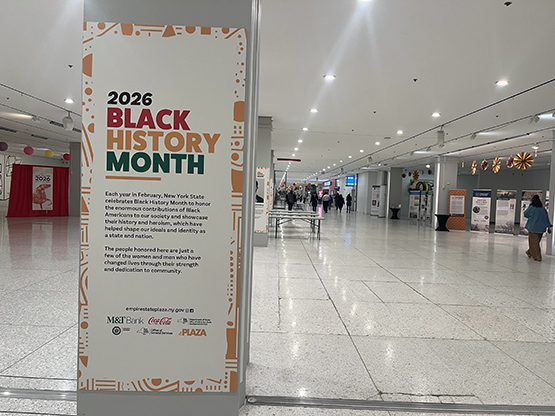
Today’s death of the Rev. Jesse Jackson at age 84 marks the passing of one of the most influential civil rights leaders in modern American history. During Black History Month especially, it is important to reflect on the leaders who helped shape the ongoing fight for justice and equality.
One of Jackson’s signature phrases was “Keep Hope Alive.” He repeated it so often that some began to parody it, but it never seemed to lose meaning for him.
He was a force for social justice across several eras: the civil rights movement of the 1960s, the post–civil rights era and into the 21st century, culminating in milestones such as the election of Barack Obama and the rise of the Black Lives Matter movement. Jackson himself ran for president in 1984 and 1988, seeking the Democratic nomination and reshaping the party’s national coalition in the process.
Jackson’s advocacy extended beyond racial justice to include a broader defense of human rights, including vocal support for LGBTQ+ rights. “He was among the first major presidential candidates to make support for gay rights a visible part of his campaign platform, and he made a concerted effort to challenge the Democratic Party’s prioritization of white, moderate, middle-class voters,” said David Masciotra, author of I Am Somebody: Why Jesse Jackson Matters.
While Jackson did not win the Democratic presidential nomination, he was a trailblazer in pushing for changes to the party’s delegate system and expanding participation in the primary process. Those efforts helped lay groundwork that later benefited candidates such as Obama in 2008. When asked by The Guardian whether he felt hurt that he did not become the nation’s first Black president, Jackson responded that he did not, explaining that he saw himself as a “trailblazer” and “a pathfinder.”
Jackson also engaged in high-profile international diplomacy. He negotiated the release of 48 Cuban and Cuban American prisoners held in Cuba, as well as Navy Lt. Robert Goodman, an American pilot held captive in Syria.
To gain insight into Jackson’s life, it is important to understand his beginnings. He was born Oct. 8, 1941, in Greenville, South Carolina. He was born in the Jim Crow South to Helen Burns, then an unmarried 16-year-old, and her married next-door neighbor, Noah Robinson. Burns married a year later, and her husband, Charles Jackson, adopted her son. It was said that even as a child Jackson was one of the most gifted communicators in American history. Robinson once said, “Jesse was an unusual kind of fella, even when he was just learning to talk.” Yet it was also said that as a child Jackson felt “lonely” and was “teased” by classmates for being “a nobody who had no daddy.”
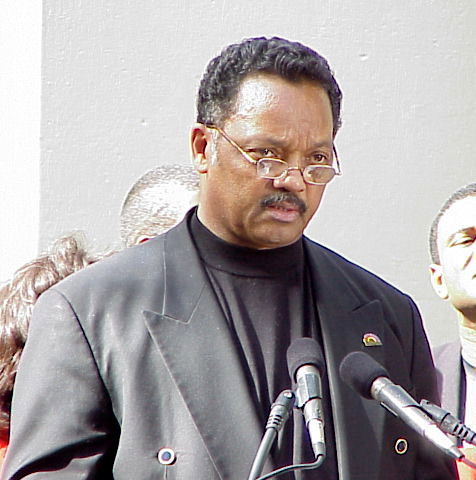
Because of this early trauma, Jackson was often described as an “aggrieved and brooding little boy.” He frequently used the phrase “I am somebody,” reflecting both his public message and his private struggle with insecurities rooted in childhood experiences.
Jackson married Jacqueline Lavinia Brown, and they had five children together. Throughout his adulthood, he demonstrated what many described as “relentless activism.” In 2017, he announced that he had been diagnosed with Parkinson’s disease, and he later faced additional neurological challenges.
His career was not without controversy. He faced criticism for remarks widely viewed as anti-Semitic in the 1980s, for statements related to the aftermath of Martin Luther King Jr.’s assassination, and for fathering a daughter after an affair with a former aide. These controversies affected his public standing at times; however, Jackson continued to advocate for political and social change.
New York Assembly Speaker Carl E. Heastie had this to say on the passing of the Rev. Jesse Jackson: “It is with profound sadness that we learn of the passing of the great Rev. Jesse Jackson. A two-time presidential candidate, a pioneer of the civil rights movement and a protégé of the late Martin Luther King Jr., Jesse Jackson dedicated his life fighting for the marginalized. He paved the way for people of color across the nation, inspiring generations of young Black leaders like myself to run for elected office and make our voices heard.”
Heastie added: “His pragmatic approach and unwavering perseverance made him the beloved figure we all know and will continue to cherish. His legacy will undoubtedly continue to inspire generations. My deepest condolences to his family and friends during this difficult time.”
Jackson’s health issues prompted him to step down as president of the Rainbow PUSH Coalition in 2023, after more than 50 years leading the civil and human rights organization he founded. His legacy was later honored on stage at the 2024 Democratic National Convention.
Jackson’s legacy lives on not only through his family and the Rainbow PUSH Coalition, but through every movement that continues to demand justice, equality and dignity. His signature phrase, “Keep Hope Alive,” remains both a reminder and a challenge for future generations.





Carol Burton • Feb 18, 2026 at 11:05 am
I love it. Very intuitive and profound. A beautiful salute to Jesse Jackson .