The month of November is Military Families Appreciation Month, as well as Veterans Day falls on November 11.
In comparison to the post-Vietnam war era, vets today receive more support through legislation to make their transition to civilian life better and deal with any effects of deployment more easily. I spoke to several older veterans to compare their post-Vietnam experiences to the present.
“They expect you to pick up where you left off. That’s the expectation, and seldom are the people able to do that, pick up where they left off, in their job, in their families, in the church,” said Kenneth Lashway, a Poughkeepsie veteran who deployed right at the end of the Vietnam War, serving in the Military Police. “Whether you had a problem or not, you’re not going to admit it…I remember a story, a guy came home for dinner at Fort Bragg, North Carolina, he got off the plane and went home and killed his family, then he killed himself.”
For vets coming home from Vietnam, there was no warm welcome from civilians either. Protests and activism against the actions of the armed forces were prevalent during that time.
“I think protests are great, but they were protesting and calling the vets, the guys coming home, baby killers, and they spat at them, did all sorts of things. So back then, the guys had civilian clothes, and they would go to the bathroom and change before they left,” Lashway added.
One of the main roadblocks veterans experienced was finding gainful employment after service while competing with civilians. The training they received in the service may not seem desirable to general employers.
Doug Jones worked as a Long Range Navigation (LORAN) Technician after specialized training following his completion of boot camp.
“Most of [the training] is military specific. Let’s say you’re in the army, you’re gonna learn how to fix tanks. You’re gonna be a mechanic, but they’re teaching you how to fix a tank. When you get out, you’ll still have to go to automotive school or even take a test, and you can pass because of your knowledge of what you learned,” Jones said.
Vets are tasked with translating their specialized skills to be as appealing as a traditional civilian. “A lot of people are competing for the same roles. So they may not have gone to college for four years like a civilian has, because they were too busy in the service working on airplanes,” said Assistant National Service Director Andrew “Drew” Clark.
For this, the Transition Assistance Program was developed and went into effect in 2013. TAP is a mandatory training that provides information and resources to prepare someone for the move from armed to civilian life. It includes resume crafting, job networking opportunities, and career transition assistance for veterans to secure gainful employment more easily than if left to their own devices.
In addition, veterans of several different generations likely experienced some form of toxic exposure during their service.
“If you’re in the military, you’re exposed to an array of different chemicals, toxic air,” Clark said. “I was an aircraft mechanic, and I was exposed to JP-8 fuel. That’s the fuel that runs aircraft exhaust. Folks who deployed to Iraq way back in the early 90s, and even today, are exposed to what they call burn pits. So they burn waste and trash, and you’re exposed to that smoke. Veterans who were in Vietnam in the 70s were exposed to Agent Orange, which was a chemical they used to kill plants and foliage. Many, many years later, they find out, hey, Agent Orange was a major cause of diabetes and high blood pressure and heart disease, so that’s toxic exposure.”
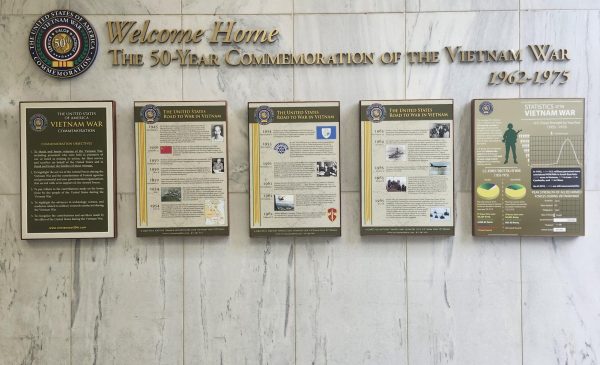
Thankfully, progress has been made in legislation to aid vets who need more support. The PACT Act, signed into law in August 2022, calls for the widening of eligibility for Toxic Exposure Disability Benefits, along with including mandatory toxic exposure screening for every veteran enrolled in VA health care. This goes hand in hand with the more recent EVEST Act introduced into Congress in June of 2025. If signed, it would automatically enroll eligible Veterans in the VA health care.
After their service, veterans and their families have earned respect and extra comforts. Legislation, such as but not limited to the EVEST or PACT Act, ensures that America can accommodate those who have fought for our country.