Introduction By Kyra Higbie & Meyghan Figueroa
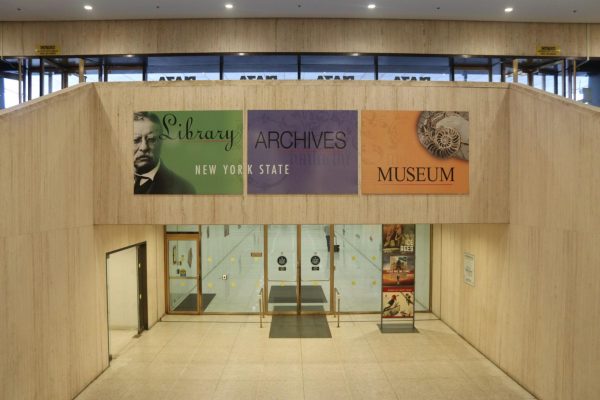
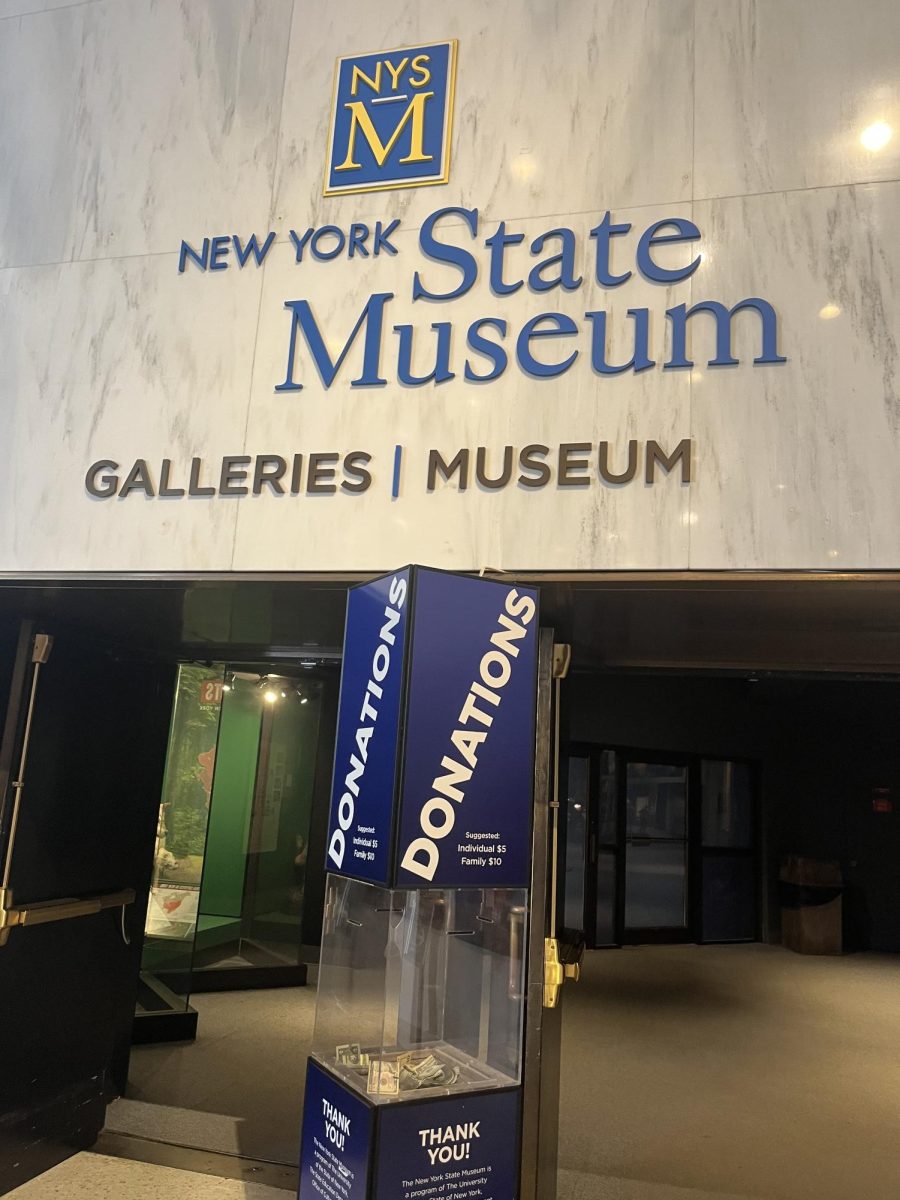
At the New York State Museum and Library in Albany, history isn’t just preserved — it’s presented as a living conversation. Located right across the street from the Legislative Gazette, our staff took the opportunity to familiarize ourselves with these free, public offerings from the state. Walking through its galleries, we encountered stories that stretched across New York’s history — from the ancient stories of the Hudson Valley’s fossils, to the more urgent histories of 9/11 and the struggle for civil rights in New York. The exhibits highlight not only what is remembered, but how memory itself is shaped, raising questions about whose voices are amplified and how the state tells its story to future generations. What we saw was less a static archive and more a reflection of New York’s evolving identity, where each display becomes part of an ongoing dialogue between past and present. Below, the staff of The New York Legislative Gazette reflects on the museum, each tackling their own topic with a distinctive voice.
Elmo Learns a New Word: “Defunded”
By Kyra Higbie
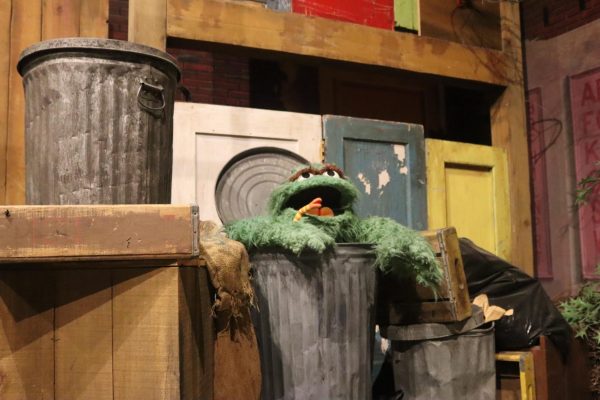
At the New York State Museum resides a nostalgic kids show that may now become a relic, lost to the public, fixed in a museum instead of on our screens. The dissolution of “Sesame Street” on PBS via the Trump administration represents the current obstacles facing public media accessibility.
In 2025, “Sesame Street” — a cultural and educational cornerstone for generations — faced what many saw as an existential threat after the Trump administration pushed forward sweeping cuts to public media funding. The administration’s executive order and subsequent congressional rescissions targeted the Corporation for Public Broadcasting (CPB), urging it to cease all federal funding for PBS and NPR.
These funding cuts struck at the foundation of how shows like “Sesame Street” have long been delivered: free, reliable educational content accessible to all children, regardless of income or geographic location. Without federal support, the CPB — which historically enabled rural and underserved local stations to stay operational — faces a shutdown.
For children who rely on PBS KIDS rather than paid services or streaming platforms, the loss of accessibility is not hypothetical. The fade-out of “Sesame Street” from PBS in certain areas would mean families without broadband, satellite or cable subscriptions may be left without this resource. Local stations, often already operating on tight budgets, are particularly vulnerable.
Beyond education, public media plays a civic role: local news, emergency alerts, and programs tailored to low-resource communities often depend on CPB funding. When that funding is cut, the impact ripples: it’s not just “Sesame Street” — it’s the entire public media ecosystem that loses its ability to serve as a common resource.
In short, what looks like a cancellation of a show can also symbolize something bigger: a shift in who gets access to educational, civic, and cultural media. When public media loses funding, it risks becoming something that works only for those who can pay — leaving behind children, families, and communities who cannot. The “Sesame Street” case shows how funding policy doesn’t just affect budgets — it shapes who gets to learn, to know, and to be part of the shared public life.
Table-Top Role-Playing Games: the Trailblazers that Redefined Board Games
By Jae Spooner
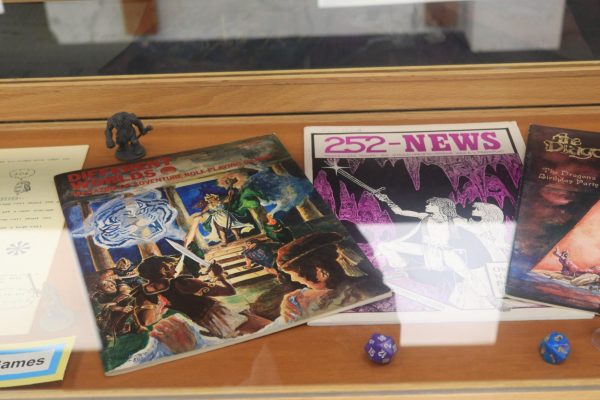
Located on the seventh floor of the New York State Library is the “Changing the Game” exhibit. This exhibit features research material about the history of different tabletop games across a variety of cultures. Featured prominently in the display, is merchandise for Dungeons & Dragons, one of the most popular table-top role-playing games (TTRPG). TTRPGs allow the player to control a singular, typically fantastical perspective. This differs from their predecessors — traditional tabletop war strategy games — which require the player to control large groups. This different style of gameplay allowed for a refreshing take on what table-top fantasy gaming could be. Articles, miniature figurines and dice from the genre’s history bring life to the display. The “Changing the Game” exhibit highlights the trailblazing nature of early TTRPGs, and the lasting legacy they’ve left on pop-culture.
A Fight for Childhood: The Coney Island Community’s Resistance to the Casino Proposal
By Maya Pasechnik

Tucked away near the carousel exhibit of the New York State Museum, ironically as it is geographically, the Coney Island exhibit displays the historical and memorable New York City hidden gem. Located on the southern tip of Brooklyn, it remains a widely visited seasonal attraction. Featuring amusement parks, public beaches, Friday-night fireworks, The Mermaid Parade, as well as a wide selection of dining options, Coney Island hosts those looking to escape the heat and have some fun.
Dating back to the 19th century, Coney Island has served as the blueprint for amusement parks to follow, having “the first carousel being built there in 1876, the first roller coaster in 1884, and the first Ferris Wheel in 1894” (New York State Museum). While generations of memories have been made in Coney Island’s amusement parks and attractions, the memories of future generations face a threat of vanishing with the proposal of a casino development.
Some members of the Coney Island community are against the proposal because of the detrimental effects it could have on the community, such as “congestion, huge traffic, more crime, especially muggings against seniors, tons of mental issues, tons of bankruptcies,” said Ari Kagan for the Brooklyn Paper. Proponents of the casino are appealing to the public through job creation within the community, claiming that 25 percent of permanent jobs would be going to Coney Island natives, however their license application estimated that the number would be closer to 9 percent (Brooklyn Paper). Parts of the existing and historic Luna Park amusement park would be removed to make way for the casino. Residents of the community have strongly expressed their opposition though several heated community meetings leading up to the final decision.
As of Oct. 1 the proposal for a casino was voted down, 4-2 by local council members.
The New York State Museum Remembers: Exploring The World Trade Center Memorial Exhibit, 24 Years Later
by Benjamin Nellis
Down the eastern hall of the first floor, one of the first major exhibits visitors may come across in the New York State Museum is the section dedicated to The World Trade Center. The entrance to the space is adorned with tattered American flags and an image of the New York City skyline from before the towers fell. Statistics about the buildings’ construction, evacuation, and the day’s death toll illustrate the scale of the tragedy. Foundational metal from the tower stretches high towards the ceiling, and a smaller, twisted piece is laid out horizontally next to the wall.
The testimony of firefighter Billy Green plays on repeat, the only member of Engine Company 6 to survive their response to the attack. The destroyed firetruck of the company rests beside his account, decorated with flowers and American flags. The crumpled and battered door of an NYPD police car hangs on a nearby wall. Newspapers from the morning after are lined along the wall, with headlines highlighting the shock and terror felt across the nation. Another display highlights the efforts of those who helped rebuild in the aftermath.
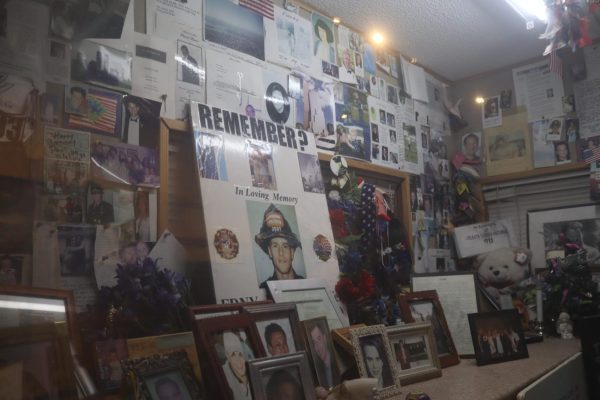
On the complete other side of the first floor is the World Trade Center family trailer, set up by the Port Authority in 2002 for families of the victims to privately observe cleanup efforts. The trailer is filled with notes, keepsakes, pictures, and numerous other mementos — becoming a space of safety and comfort for the people closest to the attacks.
This section of the New York State Museum connects our state’s capital to our largest city in a deeply moving way. The World Trade Center exhibit serves as an ever present reminder of the deep ways in which the terror attacks on 9/11/2001 have impacted so many lives, even 24 years later.
The New Netherlands Research Center Ties Modern-Day Albany to its Dutch Colonial Roots Through Educational Resources
by Alex Genovese
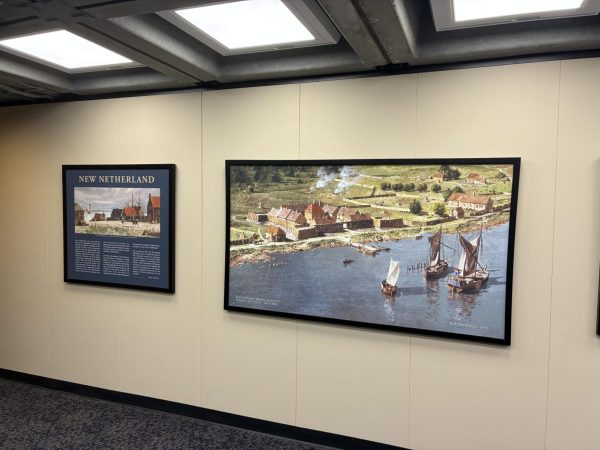
Within the New York State Library, visitors may come across the New Netherland Research Center (NNRC), one of the highlights of the library’s seventh-floor residence. Located beside the reference desk, the Research Center is dedicated to giving New Yorkers access to valuable materials to discover the history of their state. Along the walls of the room are historic artworks and documents from the early Dutch settlement of present-day New York, such as reproductions of maps from several different eras of New York’s history, spanning the 1626 purchase of Manhattan Island to a 1639 map of the Manhattan rim by Johannes Vingboons. Outside the NNRC are three enlarged paintings by L.F. Tantillo, including “Fort Orange and the Patroon’s House,” a piece illustrating a trading fort operated by the Dutch East India Company in Fort Orange, the first permanent Dutch settlement in New Netherland, which would later become Albany.
Maintaining a space within the public library for research on New Netherland helps preserve the history of New York. The room provides patrons of the State Library with a variety of resources to research and discover New York’s history as a Dutch settlement. Alongside artifacts are a large number of books about New Netherland, and tables to sit at and take in the surrounding history.
According to the New York State Library’s website, the research center was established on Sept. 8, 2009, upon the visit of their Royal Highnesses the Prince of Orange and Princess Máxima of the Netherlands. Upon this visit, “the Dutch government presented the New Netherland Institute with a gift of support to establish [the NNRC.]” Through the grant, the library’s New Netherland Project is able to continue their collaborations with the National Archives of the Netherlands. The NNRC was formally opened to the public 14 months later, in Nov. 2010.