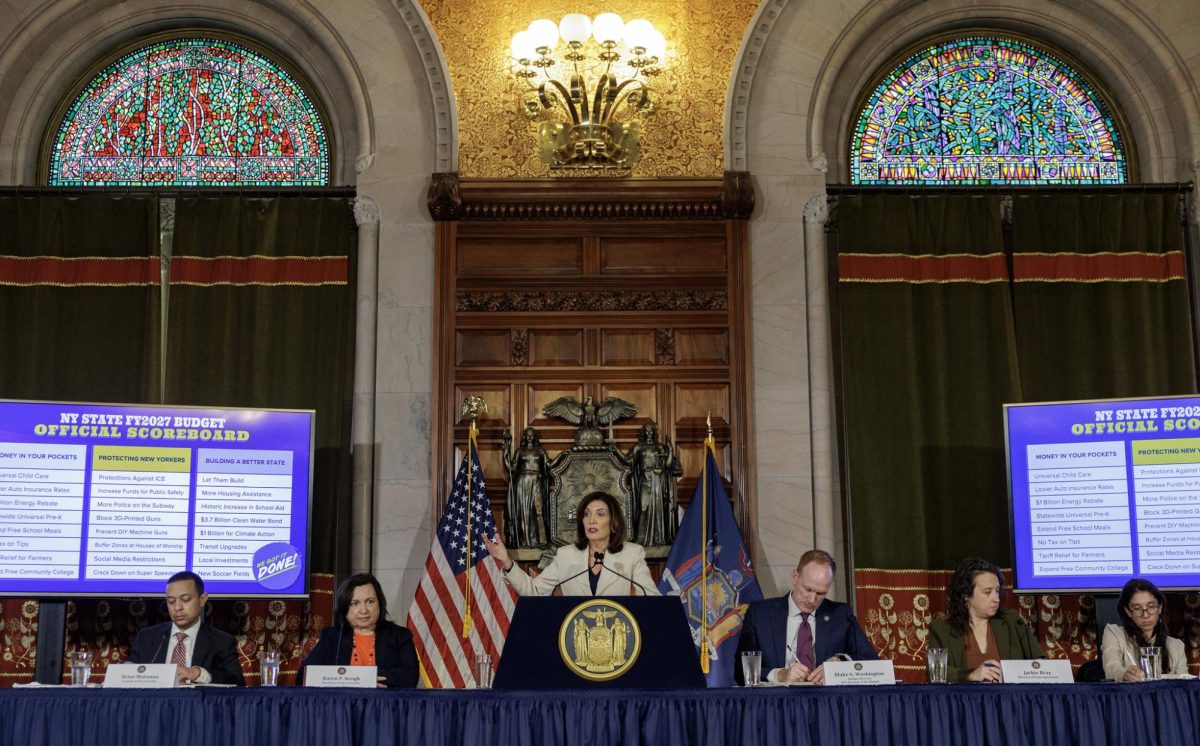
State legislators are back this week and Governor Kathy Hochul’s office touted a couple of interesting accomplishments yesterday.
One was the effects of New York City congestion pricing over the past year. In short:
- Commuters, including drivers, saving as much as 17 minutes on their trips throughout the region, with bus speeds increasing by up to 24%
- Air pollution is said to have decreased 22% in the congestion relief zone, along with declines across the five boroughs and surrounding suburbs
- Over $500 million raised to potentially modernize subways, support good jobs, and expand accessibility at 23 subway stations, including seven already underway
Congestion pricing is where drivers in the City pay higher tolls during peak times.
“I talk to everybody, you know that. We said enough with gridlock, it must end,” Hochul said yesterday in a press conference. “Enough with emergency vehicles being stuck in traffic, that must end. Enough with wasting people’s valuable time, time away from their families and their jobs and everything else they want to do in New York — just have a good time. …
“We changed how people in this great city and the region live, how they breathe, how they act, and now the results are in. Traffic entering the congestion zone is down 11 percent. And this is incredible – 27 million fewer cars going into that zone over the last year, 27 million. And the air is cleaner — pollution is down more than 20 percent in one year. People with asthma are breathing better. Little kids don’t have to worry about this. And our streets are safer. New York City recorded its safest streets in history. That’s a long time — with crashes and injuries down in the congestion zone.”
President Donald Trump had very publicly tried to stop congestion pricing last year at the start his second term, saying it would be bad for tourism and business, but the city and state moved forward anyway.
Hochul continued:
“And everybody who told me from the president on down, you’re killing New York City. Nobody’s going to come. You know, traffic’s down because the place is empty. No one’s there. It’s like, seriously? Have you been here lately? Because Manhattan has had some of its best years, the best year for Broadway. Sales tax receipts in the area that people say would be killed by this are up six percent. I mean, people are still coming, they’re still shopping, they’re still spending money. And best year for office leasing. So, all the doomsayers said people are going to leave Manhattan and there’ll be all these buildings that are empty. Best year for office leasing in 20 years leading the nation.
“So, we’re moving. Speeds are up, buses are faster. Transit ridership is up in the zone as well. But guess what? We gave you some time back. How does 25 percent faster coming through the Lincoln Tunnel sound? Oh, let me top that. How about 51 percent faster coming through the Holland Tunnel? About 21, 25 percent faster going across our bridges into Brooklyn and Queens. That’s time in your life that’s precious.”
Throttling Teen Chatbots, Too
The other area Hochul touted progress in was further regulating social media to protect youth. She held a press conference in Hamburg, NY, with students giving testimonies as to social media harms.
The new legislation hopes to protect children from online predators, scammers and harmful AI chatbots integrated on online platforms. Additionally, the Governor is proposing a statewide expansion of Teen Mental Health First Aid training, designed to give young people the tools to identify and respond to signs of mental health and substance abuse challenges among their friends.
The governor said these measures piggyback with the state’s previous ban smartphones in schools, enacting social media warning labels, limiting addictive feeds and creating safeguards against harmful AI chatbots. The governor’s office is also promoting more school-based mental health clinics, community-based treatment options, and peer-based supports for youth and adults.
“I started realizing that after going around the state and convening parents, and school board members, principals, and students, and talking to everybody about what was happening was that everybody’s lives were being consumed with the cell phone,” Hochul said at the event. “I learned was that young people were not making friends in person. They were not talking to each other during lunch or recess in the hallways. The hallways and cafeterias were silent. That is so unnatural. And there’s a lot of dark places on the internet and social media algorithms that were bombarding our students all day long and distracting them, and sometimes taking them. …”
Hochul said that the onus of protecting students from the harms of such online platforms had been placed on parents, but now state regulations will put that responsibility on the social media companies themselves.
“We’ll have first-in-the-nation age assurance standards under our Safer Kids Act, and we’re going to require social media companies and messaging and gaming companies to automatically default to those privacy settings at the highest levels for anyone under the age of 18,” Hochul said. “Parents, you won’t have to worry about it. Your kids will not be exposed to this anymore. And that means blocking, would be predators, from being able to find and message your kids because that’s going on. And parents will have approval with anyone who can connect with young people under the age of 13 and disable location sharing. They also know where your kids are, so virtual threats cannot turn into real life harm.
Chatbots have also proven a problem, especially with younger users, oftentimes affecting their mental health and sometimes leading to suicide.
“We’re going to disable certain AI companion features. Something that sounds so innocent has now turned so sinister in many cases. We’re disabling those AI companion features for young people under the age of 18 across social media platforms. That’s one less thing you have to worry about. Because these ‘friends’ are designed to keep your kids glued to the screens at all costs. And some target children in the most vulnerable moments, even encouraging self harm. That’s sick. That’s just, that’s beyond the pale.”
This may be the start of a much larger movement to limit these online platforms, as it is the first effort of its kind in the US and other states are expect to follow New York’s lead. Many users under 18 probably will be able to get around these safeguards, but many also won’t bother to try; thus overall, officials hope, this will be a positive-sum gain. And such tech companies haven’t typically acted in the best interests of its users, especially its youngest ones, so this may coerce the companies to do better overall.